

Almost a year ago, on April 6th, I participated in a local football tournament. During the match, a player, who wasn’t even particularly skilled, rammed into me. That moment tore my ACL.
At first, mid-air, I heard a pop, and given how common ACL injuries are, I was sure that had happened to me. I still hoped it was only a partial tear that wouldn’t require surgery.
Alas, it turned out to be a full ACL tear, along with a partial meniscus tear. I am naturally impatient, so I wanted to start fixing things immediately. I got the MRI done just two weeks after the injury (even though doctors recommend 3+ weeks), and then I consulted another doctor who confirmed that I’d need surgery. Being impatient, I was ready to get it done the very next day.
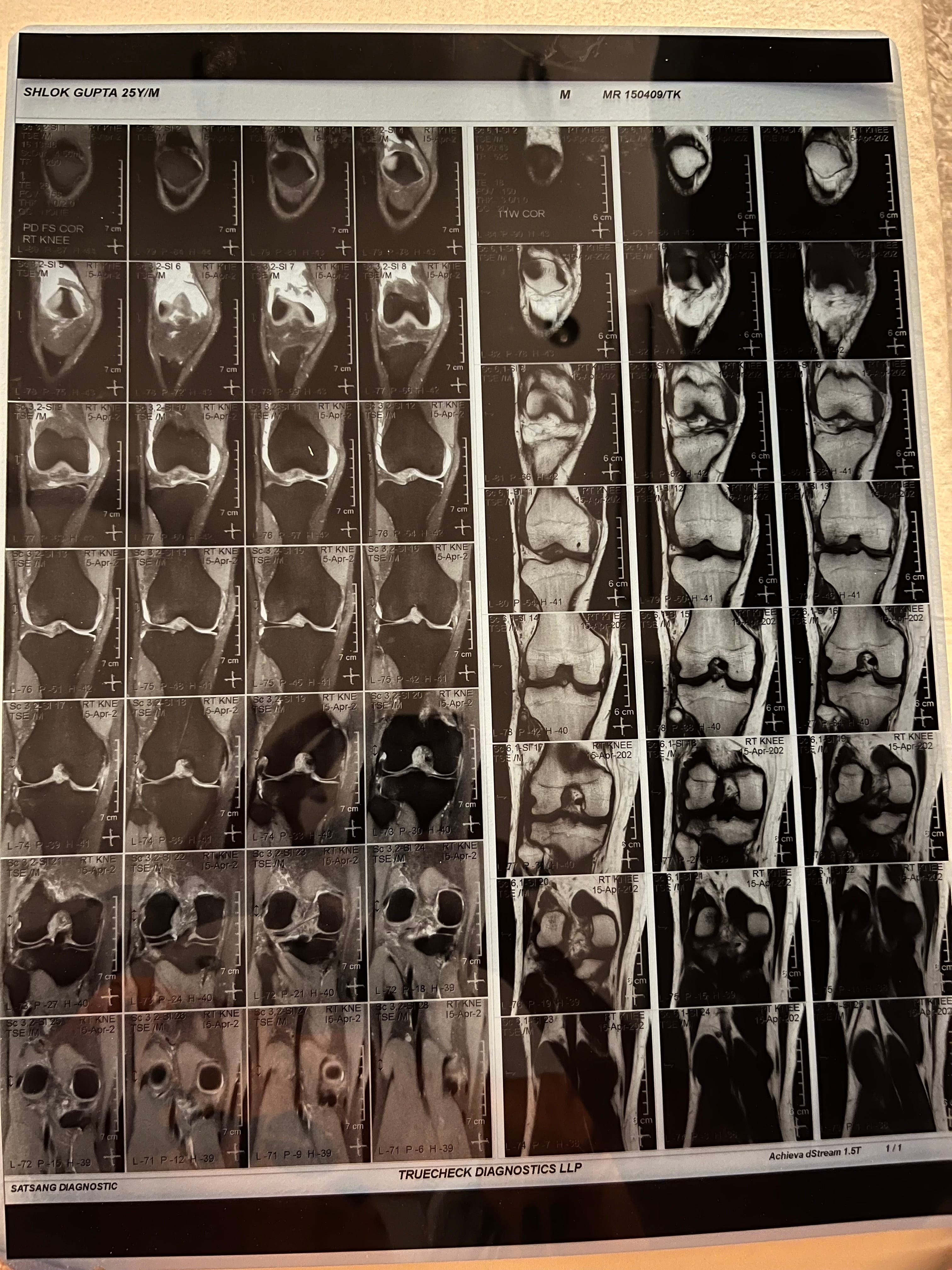
My logic was: the sooner I get the surgery, the sooner I can start recovery, and the sooner I can return to normal life.
How wrong was I?
My dad reminded me, “Jaldi ka kaam shaitaan ka kaam” and said if a surgery is inevitable, then we need to consult the best knee surgeon in Mumbai. That meant I might have to wait a few months to get even an appointment —something I wouldn’t want to do. which I didn’t want to do. Figured out Dr. Pardiwala — the best surgeon in town (famously fixed Rishab Pant) —was in Paris with the Indian Olympic team. So that was out of the picture.
My dad, being the resourceful person he is, managed to get me an appointment within days with the second-best, Dr Anant Joshi.
Dr. Joshi had a thorough look at me and said what we already knew, but suggested we delay the inevitable and wait for the meniscus to heal itself before operating on the ACL. That meant I had to wait a few more months before I could even start recovering.
Those two to three months were tough because I wasn’t really moving forward and was stuck in limbo. Fortunately, I had recently started dating, and I was allowed to travel, which kept me distracted. But I truly missed gym, playing sports, and just the active lifestyle.
Finally, on July 16th, I had my surgery. More than anything, I felt relief. Now, at last, I could start rebuilding.
In case you ever go through this (and I hope you don’t), here’s what the post-surgery recovery roughly looks like:
2 weeks: Bedridden. Can’t do anything at all. Mentally the toughest period.
2-6 weeks: You’ll be on crutches. Home physiotherapy. The most painful period. Exercises that will make any grown man cry.
6-12 weeks: More advanced recovery with the physiotherapist. No more crutches, but you’ll need a knee brace. Swimming and stairs become possible. Return to light gym work.
12 weeks+: No brace needed. Walking is easy. From here, it’s all about progressing steadily toward sports again.
Beyond the first 8 to 12 weeks, recovery becomes highly individual — based on age, gender, fitness level, etc. So it will look different for everyone. My body heals slowly, so I had to work extra hard.


Now the physiotherapy itself includes a lot of different things, and selecting the right physiotherapist might be as (if not more) important as the surgery itself. It includes many things like:
Balancing
Strength training
Plyometrics (Jumping, Accelerations, Start Stop Movement)
Stretching and Recovery
I’d heard stories of people who neglected recovery, only to re-tear their ACL or feel discomfort years later, or those who quit being active after the surgery entirely. That scared me enough to take my rehab very very seriously.


To keep me honest about the recovery, I signed up for the Tata Mumbai Marathon (scheduled for January) and damn, it worked like a charm. Having the race on the horizon was the only thing that kept me consistent, no matter my mood.
In the first week of January, I ran a 10K. I kept telling myself — if I can do this, I can push for the full 21K in two weeks. Around that time, a friend gifted me David Goggins’ Can’t Hurt Me. That book fired me up so much, I felt like I could run 100K and I soldiered on towards not giving up on the race.
Believe it or not, I ran 21 km in just under 3 hours, 6 months post-surgery.
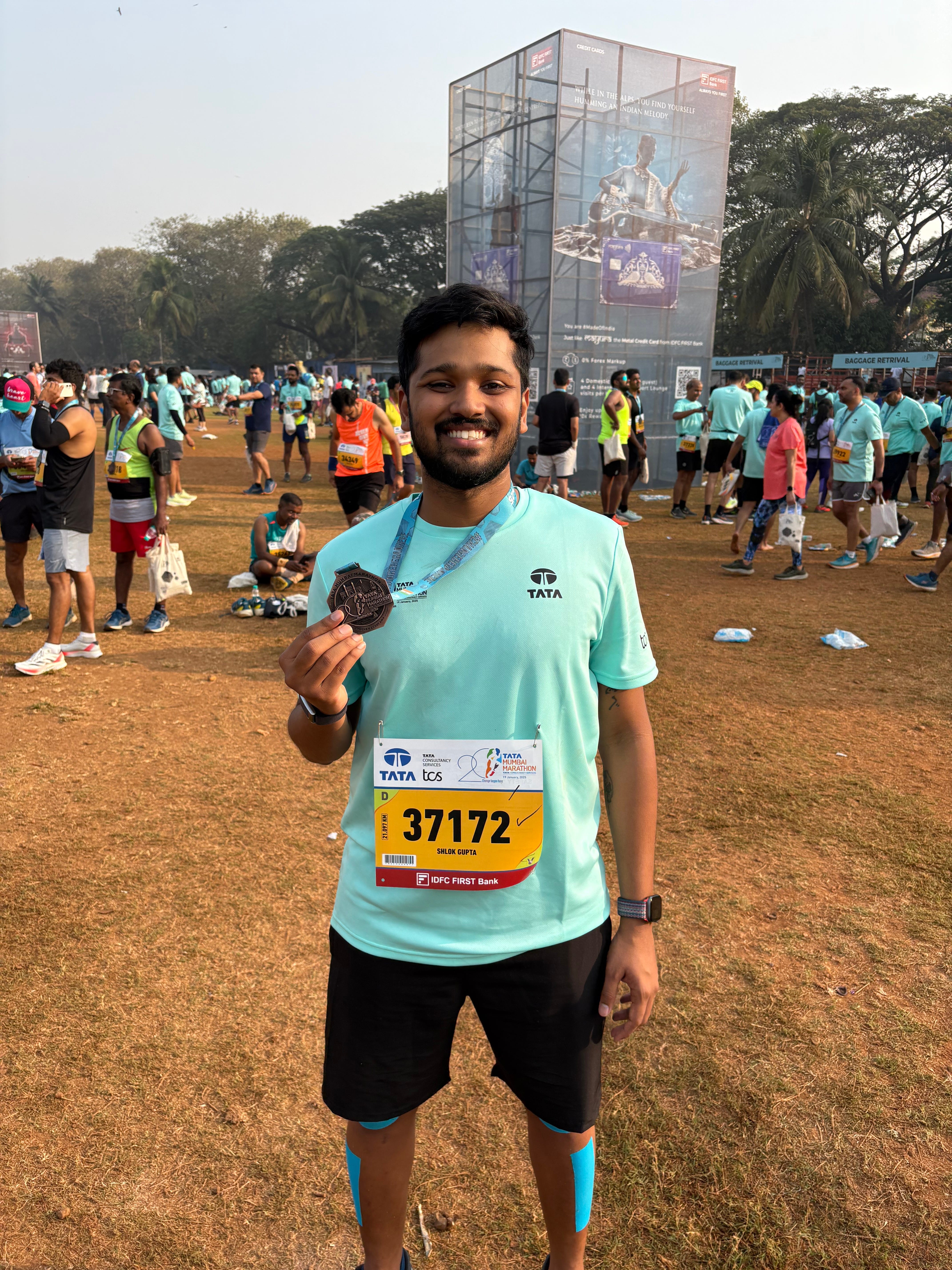
And I can’t wait to come back stronger — not just to return to sports, but to chase the dreams that injury once put on pause.
One day, I hope to fulfill 18-year-old Shlok’s dream of running a full marathon. And eventually, 25-year-old Shlok’s dream of crossing the Ironman finish line.
This journey has taught me that healing isn’t just about the physical body but much more about the mind. It’s taught me patience, discipline, and belief — the kind you build when no one’s watching.